

Introduction
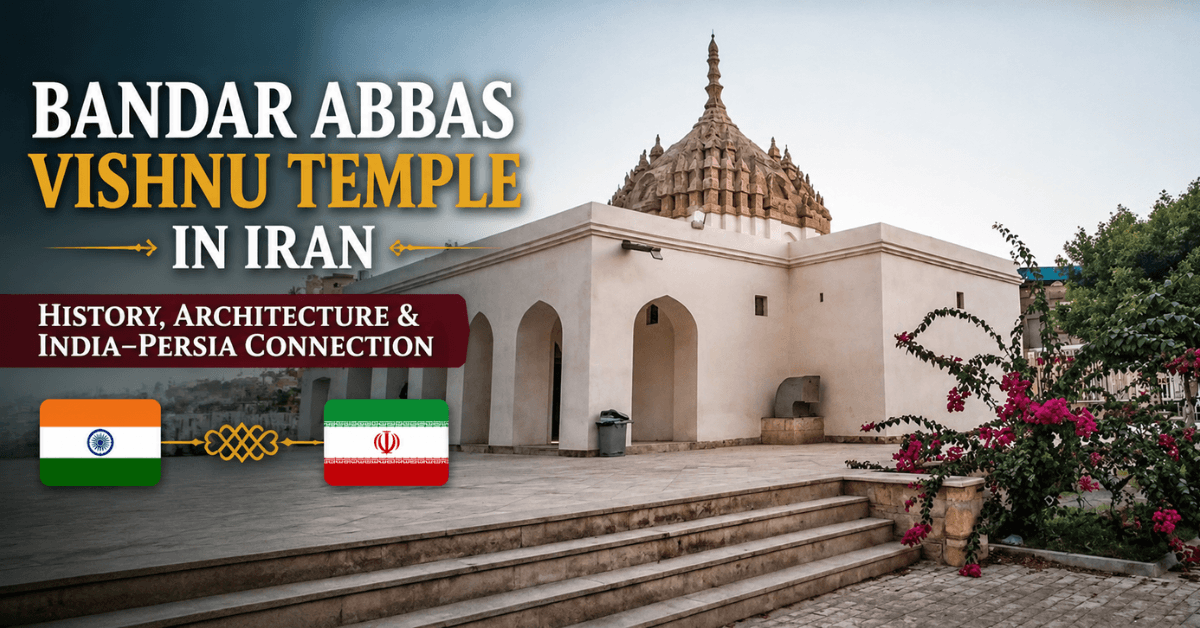
Thousands of kilometers away from the sacred land of Bharat, Bandar Abbas Vishnu Temple in Iran has stood silently with pride for centuries in the dry region of Bandar Abbas. The temple, built in 1892 in the heart of Iran, during the Qajar era by the Indian Traders and Merchants, has witnessed civilizations, border shifting, and changing history.
For decades, the temple remained forgotten, unknown to the world. But, after years of isolation and exile, the temple is once again coming alive to speak the Hindu tales of an era when Indian communities carried their traditions, beliefs, and devotion far beyond the boundaries of Bharat.
So, read this exclusive, comprehensive article on Iran’s only Hindu Temple and learn its history, unique Indo-Persian architecture, and the ancient connection between Indian traders and Persia.
About Bandar Abbas Vishnu Temple, Iran
Bandar Abbas Vishnu Temple is the only Hindu Temple in an Islamic-ruled country of Iran. The temple is about 130 or 134 years old, and is said to be Iran’s first Hindu Temple. The temple is dedicated to Lord Vishnu, one of the supreme deities of Hindus; therefore, the temple is named after him.
It was built in 1892 during the Qajar Era, during the reign of Mohammad Hassan Khan Sa’d-ol-Malek, for Hindu traders living in Iran. In today’s time, the temple reminds one of the most unique symbols of Hindu cultural presence in the Middle East. In present-day Iran, it is a cultural treasure and is registered in the lists of Iran’s national heritage monuments.
Read More On: Hindu Temples Outside India
Where Is Bandar Abbas?
Bandar Abbas in Iran is a port city on the Strait of Hormuz, which serves both as the capital of Hormozgan province and Iran’s Naval base and headquarters. It is a significant port on the southern coast of Iran on the Persian Gulf and has strategic importance in terms of Iran’s maritime activity.
Because of its strategic location in the Persian Gulf, Bandar Abbas has long been an important centre for trade activity since ancient times. Ships from Indian regions like Gujarat and Kutch regularly arrive at the port city carrying goods and traders.
Qajar Dynasty
The Qajars were a Turkmen tribe of Azerbaijan that ruled Iran from 1789 until 1925. The dynasty under the leadership of Agha Mohammad Khan Qajar reunified Iran in 1789, brought all of Iran under one rule, and established the Qajar dynasty.
set out to reunify Iran. Agha Mohammad Khan defeated numerous rivals and brought all of Iran under his rule, establishing the Qajar dynasty. The notable leaders of the Qajar Dynasty were: Mohammad Khan Qajar, Fath Ali Shah Qajar, Mohammad Shah Qajar, Naser o-Din Shah Qajar, Mozaffar ad-Din Shah Qajar, Mohammad Ali Shah Qajar, and Ahmad Shah Qajar.
Why Is The Bandar Abbas Vishnu Temple trending on the internet?
After remaining silent for a long time and many years, the temple is buzzing on the Internet with the legendary Indian actor Amitabh Bachchan’s social media post. He shared the visuals of the 130-year-old Vishnu Temple in Bandar Abbas, to which fans worldwide showed gratitude for informing them about the historic temple.
Note: See the Post
The Ancient Connection Between India And Persia
Long before modern borders existed, India and Persia shared a deep connection through trade, culture, and maritime exchange. Merchants from regions like Gujarat, Sindh, and Kutch regularly travelled across the Arabian Sea to Persian ports such as Bandar Abbas, carrying spices, textiles, and precious goods.
Along with commerce, the Indian trader community also carried the Hindu traditions, culture, and practices with them. It helped them to preserve their identity while living far away from Bharat.
The Bandar Abbas Vishnu Temple stands as a lasting reminder of this ancient relationship between India and Persia. More than just a place of worship, it reflects how faith, culture, and civilization travelled peacefully across regions through human connection and trade.
Architecture Of The Bandar Abbas Hindu Temple — Where Persia Meets Bharat
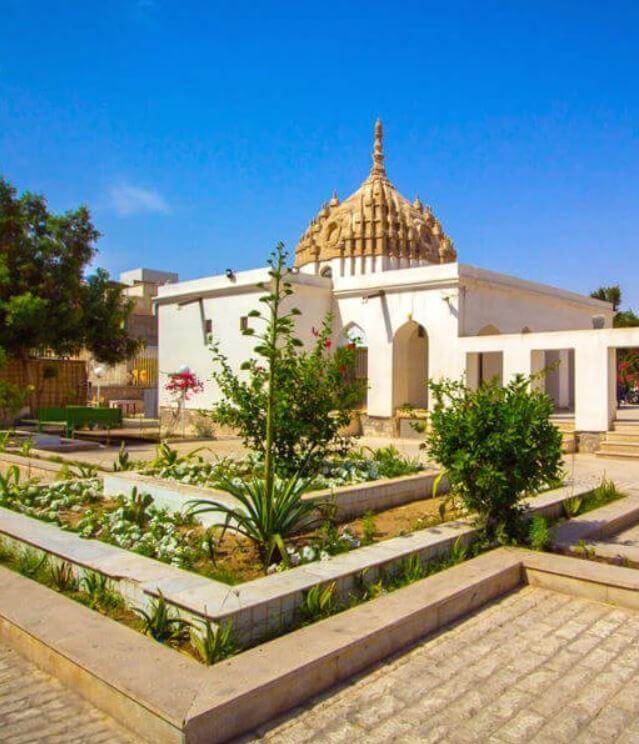
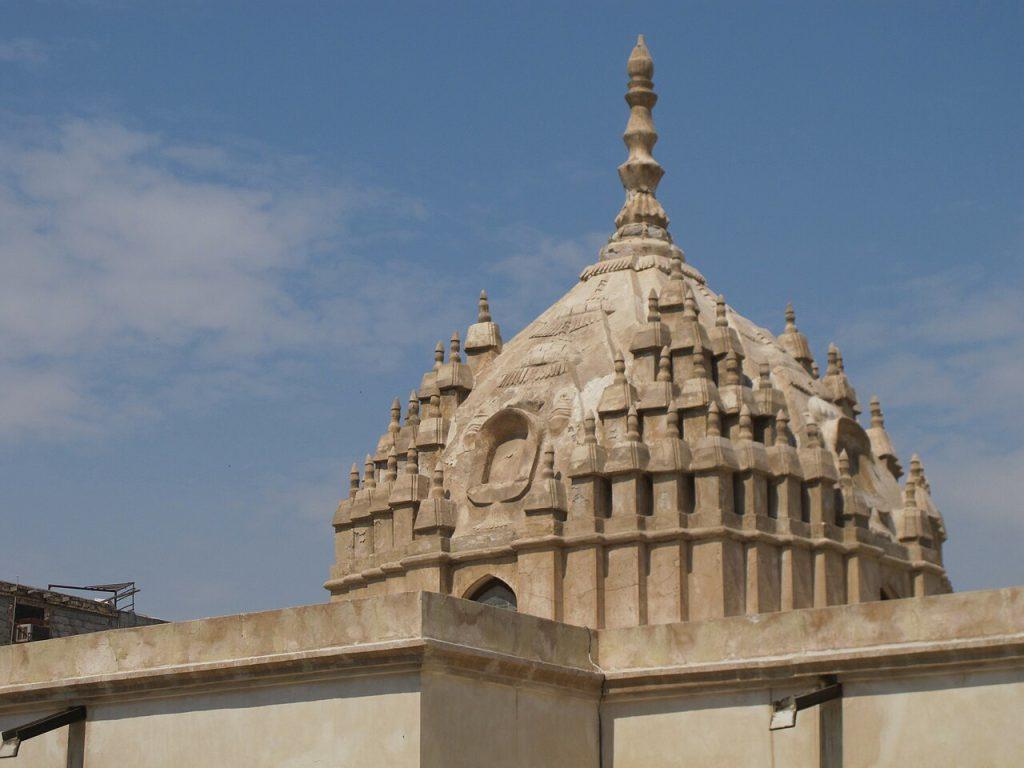
The Bandar Abbas Temple is designed in a blend of Persian design and traditional Hindu cultural influence. The architectural style of the temple features a dome, symbolic motifs, and prayer halls. It has a central square room which is covered by a dome-like structure with lotus engraving on it. There are additional rooms for students, and corridors decorated with the images of Hindu deities like lord Krishna and others. Upon seeing the construction, it can be found that coral stone, mortar, mud, and limestone chalk were used to build this temple.
The Spiritual Significance Of Hindu Temples Beyond India
The spiritual significance of Hindu temples beyond India is not limited to the Hindu religion only, but reflects the cultural and civilizational impact of India. They are symbols of memory, identity, and cultural continuity. For Indian communities living in distant lands, temples often became sacred spaces where traditions, rituals, and spiritual values could survive across generations.
The Bandar Abbas Vishnu Temple reflects this deeper significance. It flashes the civilizational memory and reminds the world of the deeper impact of Indian culture and traditions.
Built by Hindu traders living far away from their homeland, the temple offered not only a place of worship but also a sense of belonging and emotional connection to Sanatan Dharma. In unfamiliar lands, such temples became reminders of home, faith, and shared cultural roots.
Conclusion
The Bandar Abbas Vishnu Temple, and many other temples like it beyond India, reveal an important aspect of Hindu civilization. It announces the world of the Indian civilization’s ability to travel peacefully through trade, migration, and cultural exchange. From Southeast Asia to the Middle East, traces of Hindu heritage can still be found in places where Indian communities once lived and worshipped.
Today, the Bandar Abbas Hindu Temple stands as a quiet reminder that Sanatan Dharma was never limited by geography. Its presence continues to reflect the enduring journey of faith across civilizations and centuries.
Frequently Asked Questions (FAQs)
Q1. Where is the Bandar Abbas Vishnu Temple located?
Ans. The Bandar Abbas Vishnu Temple in Iran is located in the Bandar Abbas port city in southern Iran. The temple stands near the Persian Gulf and is considered one of the most unique examples of Hindu heritage in the Middle East.
Q2. Who built the Bandar Abbas Vishnu Temple?
Ans. The Bandar Abbas Vishnu Temple was built by Indian Hindu traders, mainly from communities connected to Gujarat and Sindh, during the late 19th century. These Hindu merchant communities travelled to Persia through ancient maritime trade routes for trade activities and established the temple as a spiritual center for Hindus living in Bandar Abbas.
Q3. When was the Bandar Abbas Vishnu Temple built?
Ans. The Bandar Abbas Vishnu Temple was built around 1892 during the Qajar era in Iran, during the reign of Mohammad Hassan Khan Sa’d-ol-Malek. The temple is about 130 or 134 years old, and is said to be Iran’s first Hindu Temple. Today, it stands as a reminder of the long-standing cultural and commercial relationship between India and Persia.
