


Introduction
Whom do you think protects you always? Well, you can have your own answer, but if you are a Hindu, you will obviously say your ‘Kuldevi’. She is the divine guardian deity who is always with you to protect and safeguard. So, it does not matter where you are or at which geographical location you have settled. If you are worshipping your Kuldevi and remembering her always in every good or bad type, she is there to protect you always.
However, the sad thing is that in this modern age, when the majority of us have lost touch with our Sanskars, have no respect for our culture, and have disregarded the joint family in favor of the nuclear family, we have somehow also lost the blessings of our deities.
But, you need not to dismayed because you can still regain what you have lost by knowing who the kuldevi is, what her significance is, what her roles are, when to worship her, and how you can recall your kuldevi. You can find all this information in this insightful article. So read the lines with pure devotion, as every word has come out from the heart that is devoted to the divine ultimate mother goddess Durga Maa.
Who Is Kuldevi?
Before Knowing Who the Kuldevi is? You must learn the terms with which the word has been formed. The word ‘Kuldevi’ is formed with the association of the words ‘Kul’ and ‘Devi’.
If you know a little bit of Sanskrit or Hindi, you would be familiar with the word ‘Kul’. It is a Sanskrit word referring to the ‘family’, ‘Clan’ or ‘Lineage’. I can pronounce here some of the popular ‘Kul’ from the Indian subcontinent here such as – Raghukul (The family or clan of Raghu, who was the ancestor of Lord Rama), Yadavkul (The family or clan of Yadavas to which Lord Krishna belongs). So, I am sure you have understood the meaning of the term ‘Kul’. So, now proceeding with the term ‘Devi’.
‘Devi’ is again a Sanskrit origin word that is synonymous with the English word ‘the goddess’. In Hinduism, ‘Devi’ is considered the divine feminine energy and regarded as the ‘Mahashakti’, ‘Mahamaya’, ‘Jagatjanni’, ‘Jagdamba’, and with many other names. It all means that she is the primary source of energy in this universe and the underlying force behind every creation. She is omnipotent and omnipresent.
In the last few articles in ‘The Hindu Tales’, we have learned too much about her. So, if you have not gone with them, read these articles first to get a detailed overview of the term ‘Devi’. It will help you build the concept around this –
- Devi – The Supreme Feminine Power: Meaning, Myths, and Manifestations
- Why Do Hindu Women Carry The Devi Surname In India?
Hence, as you have developed enough understanding around the words ‘Kul’ & ‘Devi’. You have figured out the meaning of the word ‘Kuldevi’ as the ‘Divine Deity or Guardian to Protect A Particular Family, Clan, or Lineage’.
The Significance Of Kul Devi
When talking about the significance of Kuldevi, she is one of the manifestations of the supreme feminine energy, whom we call Parameshawari, Goddess Durga, or Mahashakti. She acts as a divine entity to transcend the part of universal cosmic energy into our individual lives. Therefore, she is worshipped as a guardian deity of the family and the Rakshak (Protector) to safeguard the family.
Spiritual Significance
In general, a Family or Kul is an important institution in society. But, in Hinduism, more than just a social unit, a family is a spiritual continuum that carries Samskaras, Karma, and ancestral obligation across generations. Therefore, Kuldevi, being the guardian deity of the Kul, provides a collective spiritual consciousness to the lineage.
She guides the family to the ‘Dharmic Path’, protects the lineage from unseen disturbances, and guides descendants during periods of confusion, moral crisis, or karmic turbulence. She helps the lineage maintain harmony between ancestral karma and present actions. She helps to keep the family aligned in their spiritual path.
Religious Significance
In a lineage, worship of Kuldevi is not optional but a must-do ritual for every family member. She is the first deity to be worshipped on special occasions and auspicious events, such as weddings, births, and the construction of new homes, etc. She is the ‘Rakshak (Protector)’ of the lineage. Therefore, worshipping her is a ‘Kul Dharma’. Doing so protects the family from other hindrances and outer disturbances.
Cultural Significance
Worship of Kuldevi is a collective participation of all the family members in the ‘Puja’. It is like a festive environment in the family, where the Puja involves customs, sacred offerings, devotional folk songs, group dances, and a group dinner, among other things. The family members travel across regions to the ancestral home or temple just to participate in the Puja, if they are settled somewhere during this period. Therefore, worshipping her is a means of transmitting values like unity, respect for elders, and continuity of tradition to younger generations. Her worship is a living bridge between identity, memory, and heritage.
Roles Of Kuldevi
In a lineage or family, Kuldevi is in many roles, such as:
- A Divine Guardian: Kuldevi is the divine guardian of the lineage. Therefore, she is worshipped first. It feels like ‘her’ being in the role of the eldest divine member of the family, who guides, protects, and blesses the family.
- The Protector: Just as mothers play the role of protectors in a family and shield us from every trouble, similarly, the Kuldevi protects the lineage from all misfortunes. She acts as the ‘Rakshak’ or the ‘Protector’ of the family from any trouble.
- Bridges Ancestral Connection: In the lineage, she is the deity, our ancestors were worshipping for years. Thus, when the new generation learns to worship the ‘Kuldevi’, she helps them to maintain their ancestral connection through spiritual link, family history, and shared identity.
- The Provider: Kuldevi is the source of power of knowledge in the family or lineage. She blesses the family with well-being, wealth, peace, wisdom, prosperity & spiritual awakenings. She helps resolve the Karmic debts of the lineage and makes sure the bloodline continues & flourishes.
How Kuldevi Is Different From Ishtdevi?
Ishta is a Sanskrit word that means ‘desired’. Therefore, Ishtdevi or Ishtdevta is ‘the divine deity who has been desired‘. Ishtdevta or Ishtdevi is the divine deity chosen for personal preference, protection, and individual spiritual growth. You can choose any divine deity, such as Lord Krishna, Lord Vishnu, Lord Shiva, Lord Ganesha, Goddess Durga, etc, as your Ishtdevta or Ishtdevi. But Kuldevi or Kuldevta should be worshipped first, then Ishtdevi or Ishtdevta. Because worship of Kuldevi is for lineage protection, and worship of Ishtdevi is for personal connection and individual spiritual journey. Therefore, the lineage or family should be prioritized first, upon personal growth and protection.
Consequences of Forgetting Kuldevi?
In today’s time, with urbanisation and modernity, most people have lost their ancestral connection. In such circumstances, most people have forgotten about their Kuldevi. They neither do regular worship of her nor perform special puja for her on special occasions. The nuclear family trend also caused people to forget their Kuldevi.
This is the reason why many people complain about family discord, loss of spiritual interest, health issues, decline in prosperity, many obstacles in life, and, toxic family environment. All these are the consequences of forgetting Kuldevi.
How To Know Your Kuldevi?
If, for any reason, you are unaware of your Kuldevi or have forgotten, the following are the ways you can adopt to gather information about her:
- Consultations: You can ask your parents, grandparents, uncles, and relatives about your Kuldevi. They must know this, and if not, they could refer to the person who can give you knowledge about your lineage deity.
- Family Priest: If you have your family priest, for every Puja or worship in the family or lineage, they must know your Kuldevi.
- Ancestral Home or Village: If you live at a place other than your ancestral home or village, you must visit your ancestral place to find out who your Kuldevi is.
- Ritual Site: Usually, in an ancestral village or place, there is a specific religious site or specific temple where the key ceremonies in the family, like Mundan, Marriage, etc., take place. You can visit such a site to know your Kuldevi.
- Gotra: Your Gotra also reveals some information about your Kuldevi. Therefore, knowing your Gotra in consultation with a priest or astrologer can lead you to know your goddess.
- Family Records: In Hinduism, priests usually preserve the Lineage history or family when the last rite is performed. In cities like Haridwar and Kashi, priests maintain huge archives of family records and lineage history. You can visit there to find your family records. It may lead to knowing your Kuldevi.
- Intuition: Many a time, when you make a wish to know your Kuldevi in front of a deity, she reveals her identity herself in dreams or through intuition. Apart from this, you can also apply some trick or Puja in consultation with a Priest that may lead to knowing your lineage deity through intuition.
Famous Kuldevis Of Some Gotras
(a) Nikumbala Devi / Pratyangira Devi
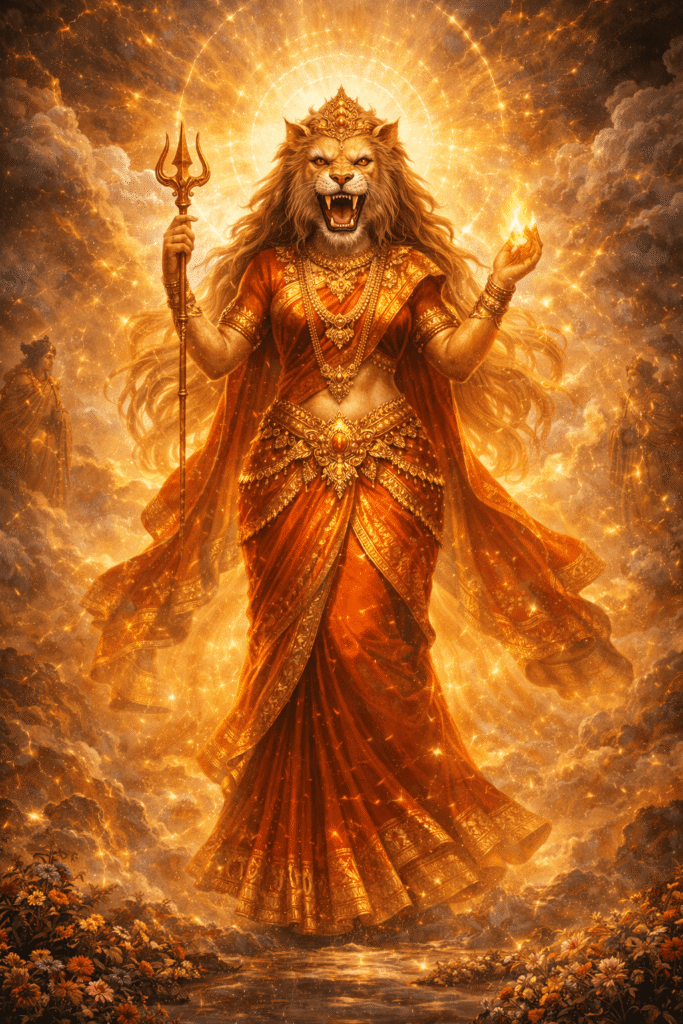
Do you remember the famous Ramayan show in India by Ramanand Sagar ji? You all have seen that. I would like to remind you of the scene when Indrajeet, the son of Lanka King Ravana, performs the special puja to his Kuldevi – Nikumbala Devi. She provides all the power & protection to Indrajeet when he goes to war with Ram and Lakshman. Her other names are Pratyangira Devi, Atharvana Bhadrakali, and Narasimhi Devi. She is also known as the kuldevi of the demon king Ravana. Her depiction is a mix of lion face and human body. Therefore, she is called Narsimhi (the feminine version of Narsimha).
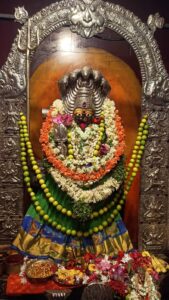
The Story Behind the Appearance of Goddess Nikumbhala Devi
According to the Hindu sacred texts and the Hindu tales, Narsimha was the fourth incarnation of Lord Vishnu. He appeared to slay the demon King Hiranyakashyap, who was torturing Vaishnavites and the Lord Vishnu’s favourite devotee, Prahalad. So when his atrocities went extreme, lord Vishnu incarnated as the fierce, aggressive, part lion, part human form. His depiction was of a male lion’s face and a male human body. He was called Narsimha. He slew Hiranyakashyap, but even after slaying the demon king, his anger didn’t cool down. The other Devas tried to calm him, but failed. They all prayed to lord Shiva and asked him to cool Narsimha’s anger.
Then, Shiva appeared in an aggressive, fierce ‘Sharabh’ form to subdue the anger of Lord Narsimha. His appearance was of a winged creature and depicted as part-human, part-bird, and part-lion. They both engaged in a dangerous war that none of them could stop.
Thus, the Mahashakti – the Supreme Divine Feminine, appeared in a fierce, aggressive form as Nikumbhala Devi. Her appearance was a woman’s body with a male lion’s face. Thus, she was representing the balance of energy. When she intervened in the fight, Sharabha Avatar of Lord Shiva and Narasimha Avatar of Lord Vishnu went on calm.
Badi Devkali / Maa Badi Devkali
Badi Devkali, or Devkali, is considered the Kuldevi of Lord Ram’s lineage. She is worshipped in the Maa Kali form. Her temple is located in the capital city of Lord Ram – Ayodhya. In the temple, the idols of other deities such as Mahakali, Mahalakshmi, and Mahasaraswati are also present and worshipped along with Maa Badi Devkali.
NOTE: Download the list of other famous Kuldevis tabled based on Lineage, Gotra, Community & Place.
When To Worship Kuldevi?
Kuldevi is the guardian deity of the lineage or family; therefore, she should be worshipped on a regular basis to seek her blessings. Apart from it, you should also not forget to perform special Puja or worship on special occasions such as Marriage, Birth, Mundan, and other Sanskars or rituals in the family.
Where To Worship Kuldevi?
In Hinduism, every Hindu home has a dedicated room for puja, people call it home temple, Sirwa Ghar, Gosai Ghar, and with many other names, according to the region. Thus, the Vigraha (idol form), or deity symbol, is present in that puja room where she is worshipped regularly. Apart from it, there could also be an ancestral temple of the family or lineage where all the Sanskars, rituals, rites, and Kuldevi worshipped are performed.
How To Worship Kuldevi?
Kuldevi is not an ordinary deity but has significant importance in our lives. Therefore, you must worship her with complete devotion and faith. You should maintain the proper chastity and come with a pure mind and heart for worship. Consult the family priest about what necessary arrangements you have to make to do the Puja successfully. Usually, she is worshipped with the offerings that are favourite to her. Therefore, you must arrange such offerings and offer to the goddess to seek her blessings.
Why You Should Always Remember Your Kuldevi?
I believe Kuldevi is like the divine mother, who is the same compassionate, loving, caring, and protective as our earthly mother is. Therefore, like a child who always looks for his/her mother, we should also remember our lineage deity. Remembering her always brings fortune and auspiciousness in the family. Your lineage flourishes, and your bloodline continues.
Conclusion
Kuldevi is not just a family deity—she is the divine soul of a lineage. She protects, guides, and carries the spiritual legacy of generations. Remembering and worshipping your lineage deity reconnects you with your roots, restores harmony, and invites divine protection into your family life. In a fast-moving modern world, honoring Kuldevi is a powerful way to preserve sanskar, identity, and ancestral blessings.
Frequently Asked Questions (FAQs)
Q1. Who is Kuldevi?
Ans. In Hinduism, Kuldevi is the divine guardian deity who protects a particular Kul, Vansh, Family, or Lineage. She provides the spiritual consciousness to the family. Her blessings let family grow and lineage flourish.
Q2. How Can I Find My Kuldevi?
Ans. You can learn about your Kuldevi by consulting with the eldest members in the family, asking from family priest, visiting the ancestral home or village, visiting the ritual site in the village where family rituals take place, learning your Gotra, searching in your family records, and through intuition.
Q3. Can I Know My Kuldevi By Surname?
Ans. Yes, your surname is linked to your Gotra. Thus, by learning your Gotra, you can find some information about your Kuldevi. You can then consult it in your family to know the exact name of your Kuldevi.
